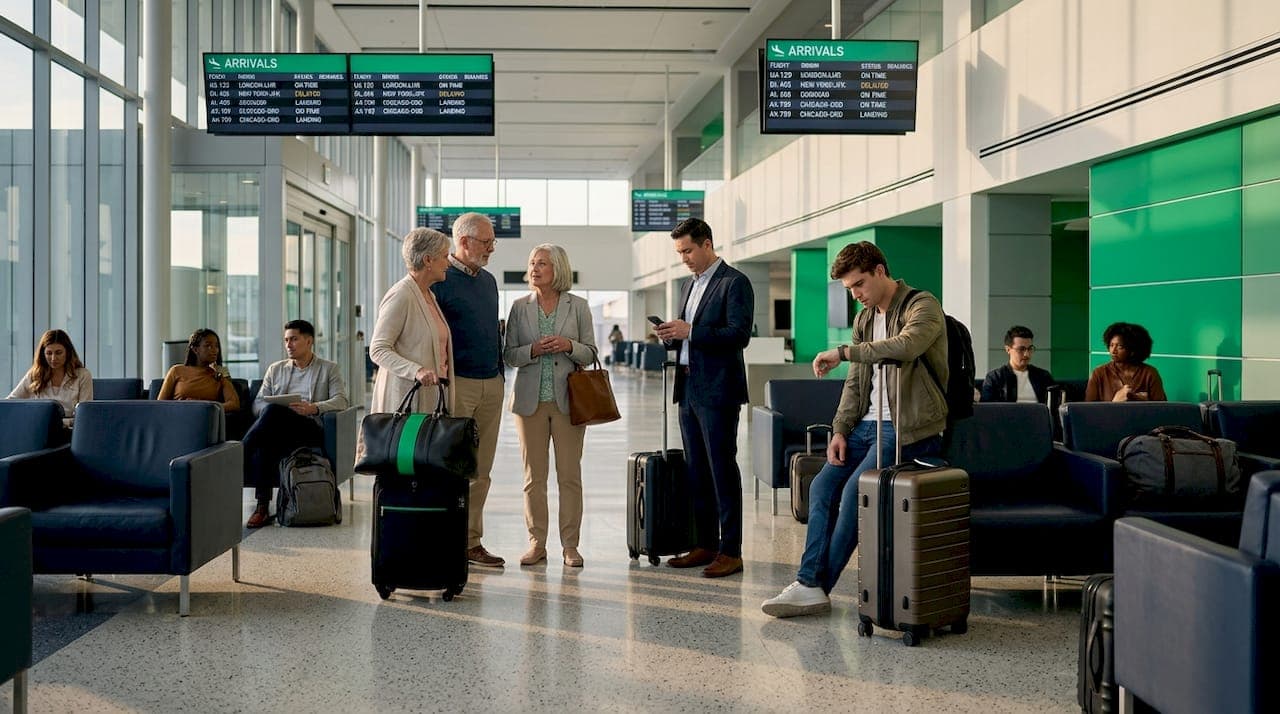
Airport transfer delays are defined as disruptions between a flight's arrival and a traveler's departure from the airport in a hired or shared vehicle, caused by a chain of operational, environmental, and policy-driven failures. Most travelers assume a delayed flight is the only real risk. The actual causes run deeper: FAA Ground Delay Programs, curbside access restrictions at airports like LAX, construction-driven lane closures, security staffing shortages, and dispatch systems that cannot adapt fast enough to real-time changes. Understanding what causes airport transfer delays before you travel is the difference between a manageable inconvenience and a missed connection.
What causes airport transfer delays most often
Airport transfer delays rarely trace back to a single event. They are the product of cascading systemic constraints involving infrastructure, policy, weather, and human coordination failures stacking on top of each other. A flight lands on time, but the driver is stuck in a curb lane backup. The curb lane is backed up because construction reduced capacity. The construction has been running since early 2026 and will not finish for years. That is not bad luck. That is a system working exactly as designed, just not in your favor.
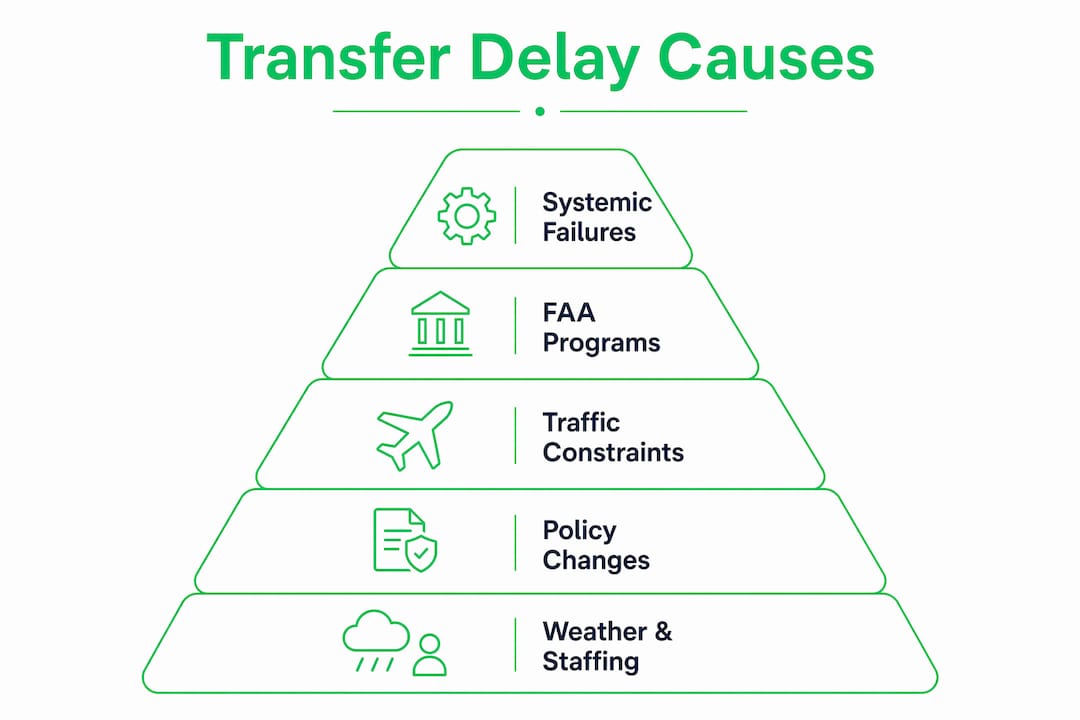
The top reasons for airport transfer delays fall into five categories: airport traffic and operational constraints, air traffic control programs, curbside policy changes, weather and staffing pressures, and dispatch timing failures. Each one can delay your pickup independently. When two or three hit simultaneously, airport transfer wait times can stretch from minutes into hours.
How airport traffic and operational constraints create pickup delays
Airport curb lanes are among the most congested stretches of road in any city, and they are getting worse. Construction projects reduce the number of active pickup lanes, which forces drivers to either circle the terminal or park and wait. Both options add time and cost to your transfer.
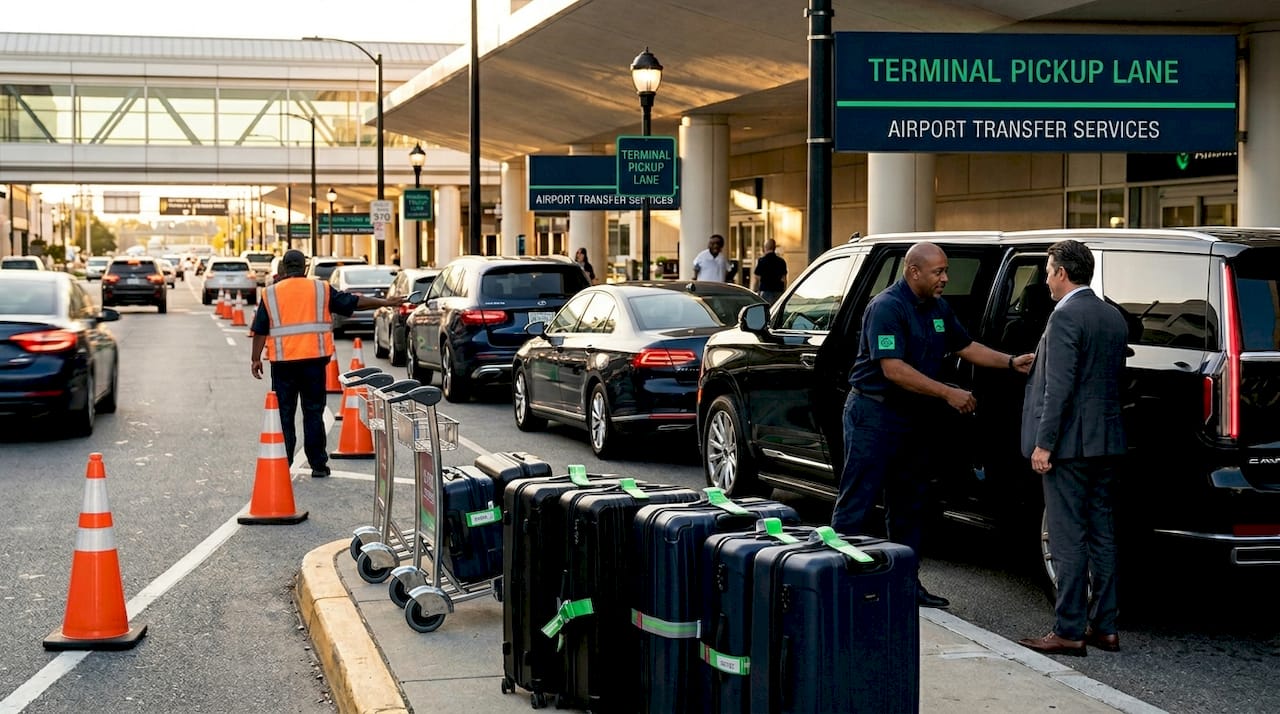
San Antonio International Airport is a clear example. Curb lane closures began in March 2026 and are expected to run through 2028, cutting available curbside space and complicating luggage assistance logistics for every transfer vehicle. That is nearly three years of reduced pickup capacity at a major U.S. airport. Travelers who do not know about it will stand at the curb wondering where their driver is.
Terminal access restrictions add another layer. Many airports now use flow management systems that limit how long a vehicle can idle at the curb. Drivers who cannot find their passenger within 60 to 90 seconds are forced to loop back, adding 5 to 15 minutes per failed pickup attempt. During peak arrival windows, this compounds quickly.
- Construction and lane closures reduce physical curb capacity, forcing drivers to park rather than stop curbside
- Terminal access time limits push drivers into repeated loops when passengers are slow to exit
- High-volume arrival windows create congestion spikes that no amount of driver skill can fully avoid
- Luggage claim delays mean passengers arrive at the curb later than the driver expects, breaking the timing window
Pro Tip: Check your specific terminal's pickup zone before you travel. Many airports have updated their maps in 2026 due to construction, and the zone your driver expects may have moved.
How FAA programs create cascading transfer delays
The FAA's Ground Delay Program is the most misunderstood cause of airport transfer disruption. Most travelers think their flight is simply "late." What actually happens is more structured and more consequential.
A Ground Delay Program (GDP) is issued when an airport cannot absorb its scheduled arrival volume, typically due to weather, runway closures, or equipment failures. The FAA assigns each affected flight an Estimated Departure Clearance Time (EDCT), which is a specific slot that controls when the plane can leave its origin airport. GDPs typically run 2 to 4 hours, and they are issued proactively, sometimes before any weather has actually arrived at the destination.
"Traffic-management programs like GDPs are designed to evenly spread arrival load at airports unable to absorb scheduled volume, creating transfer delays even when local weather seems clear." — AeroCorner
Here is why this matters for your transfer:
- Your flight departs late due to an EDCT assigned hours before departure
- Your driver is dispatched based on the original scheduled arrival time
- The flight lands 90 minutes after the original estimate
- The driver has either been waiting (adding cost) or was dispatched too early and left the staging area
- A new dispatch is triggered, but fixed dispatch schedules often do not adapt rapidly enough to flight arrival changes, causing suboptimal pickup timing
The cascading effect is the key insight here. A GDP issued in Chicago because of weather in New York delays a flight that lands in Atlanta, which then delays a transfer pickup for a passenger connecting to a train in downtown Atlanta. The original weather event never touched Atlanta at all.
How curbside policies affect transfer pickup efficiency
Airport curbside policy is changing faster in 2026 than at any point in the past decade, and most travelers have no idea. These policy shifts are among the most underreported factors affecting airport transfers.
LAX implemented a significant policy change in 2026 that directly affects transfer coordination. The airport now caps rideshare curbside pickups at 30% of terminal traffic, routing the remaining 70% of rideshare passengers to the Ground Transportation Center. Terminal curb fees rose to $12 per pickup, with remote fees set at $6. The practical result is that most rideshare and transfer passengers must now walk or take a shuttle to a remote hub before meeting their driver.
| Pickup type | LAX 2026 policy | Traveler impact |
|---|---|---|
| Terminal curbside (rideshare) | 30% cap, $12 fee | Limited access, possible long wait |
| Remote hub (Ground Transportation Center) | 70% of rideshare volume | Extra walking, shuttle time added |
| Pre-booked private transfer | Dedicated lane access | More predictable, less affected |
| Taxi | Subject to same curb caps | Similar delays to rideshare |
The hidden delay here is coordination failure. When drivers stage at incorrect locations under new restrictions, passengers wait at the terminal curb while the driver waits at the remote hub. Neither party knows the other is in the wrong place until they call each other, and by then, the driver may need to re-queue.
Pro Tip: When booking any airport transfer in 2026, confirm the exact pickup point with your provider before landing. Policy changes at major airports have moved pickup zones significantly, and your booking confirmation may reference an outdated location.
How weather and staffing shortages extend transfer wait times
Weather does not just delay flights. It extends every step of the airport process that follows, and those extensions stack directly onto your transfer wait time.
Springtime U.S. delay spikes in 2026 have been linked to a combination of storm activity and security checkpoint staffing strain. Even on days when the weather clears by the time flights land, the staffing shortages triggered by earlier storm activity persist. Checkpoints that were understaffed during the storm remain understaffed for hours afterward, creating long lines for passengers who landed in clear conditions.
| Delay factor | Typical added wait time | Compounding effect |
|---|---|---|
| Security checkpoint understaffing | 20 to 45 minutes | Delays passenger exit from terminal |
| Weather-related gate holds | 30 to 90 minutes | Pushes all downstream timing |
| Baggage claim slowdowns | 15 to 40 minutes | Passenger arrives at curb late |
| Construction-reduced curb lanes | 10 to 25 minutes per loop | Driver cannot stop curbside |
The top causes of airport delays include weather, late-arriving aircraft, crew scheduling issues, security events, and ground operations failures. Each one extends the time between your flight landing and your transfer vehicle departing the airport. A 20-minute baggage delay combined with a 15-minute curb loop and a 30-minute GDP-related flight delay produces a 65-minute transfer disruption from causes that had nothing to do with your driver.
How to avoid airport transfer delays
Avoiding transfer delays entirely is not realistic. Reducing their impact is. The travelers who handle airport transfer disruptions best are the ones who planned for variability before they left home.
- Book transfers with real-time flight tracking. Services that use dynamic dispatching adjust pickup timing based on live flight status rather than scheduled arrival, which eliminates the most common mismatch between driver arrival and passenger arrival.
- Confirm the pickup zone before landing. Call or message your driver while you are still on the plane. Policy changes at airports like LAX have moved pickup points, and a 30-second confirmation prevents a 30-minute search.
- Add buffer time between your transfer and any onward connection. A 90-minute buffer between landing and a train or connecting flight is the minimum for major airports with known congestion issues.
- Avoid peak arrival windows when possible. Flights landing between 5 p.m. and 8 p.m. local time face the highest curb congestion at most major airports. If your schedule allows, earlier arrivals reduce exposure to traffic-driven delays.
- Choose pre-booked private transfers over on-demand rideshare at high-restriction airports. At airports with rideshare caps like LAX, pre-booked private airport transfers often retain dedicated curb access that rideshare vehicles cannot use.
Key takeaways
Airport transfer delays result from a chain of systemic failures across infrastructure, policy, weather, and dispatch timing, not from any single cause.
| Point | Details |
|---|---|
| FAA Ground Delay Programs | GDPs run 2 to 4 hours and cascade delays to transfers even when local weather is clear. |
| Curbside policy changes | LAX's 2026 cap routes 70% of rideshare passengers to remote hubs, adding coordination complexity. |
| Construction and lane closures | Projects like San Antonio's 2026 to 2028 curb closures reduce pickup capacity for years. |
| Staffing and weather compounding | Security understaffing extends passenger exit times even after weather clears. |
| Dynamic dispatch matters | Transfer services with real-time flight tracking reduce pickup timing mismatches significantly. |
The part most travelers never think about until it's too late
I have spent years analyzing how airport transfers go wrong, and the pattern is almost always the same. Travelers focus entirely on their flight status and assume the transfer will sort itself out. It will not.
The most underestimated factor is policy change. Airports update curbside rules, fee structures, and pickup zones constantly, and the updates rarely make national news. A traveler who booked a transfer six months ago and never re-confirmed the pickup point is operating on outdated information. At LAX, that mistake now costs you a $12 fee and a walk to a remote hub you did not know existed.
The second thing I would push back on is the idea that delays are random. They are not. GDPs are issued hours in advance. Construction timelines are published. Peak arrival windows are predictable. The travelers who consistently avoid the worst transfer disruptions are the ones who treat the airport as a system with known failure points, not as an unpredictable environment where you just hope for the best.
My practical advice: treat your transfer confirmation as a living document. Check it the night before, check it when you land, and communicate with your driver before you reach the curb. That three-minute habit eliminates the majority of coordination failures that turn a 10-minute wait into a 45-minute one.
— Arthur
How Zont reduces your transfer delay risk across Europe
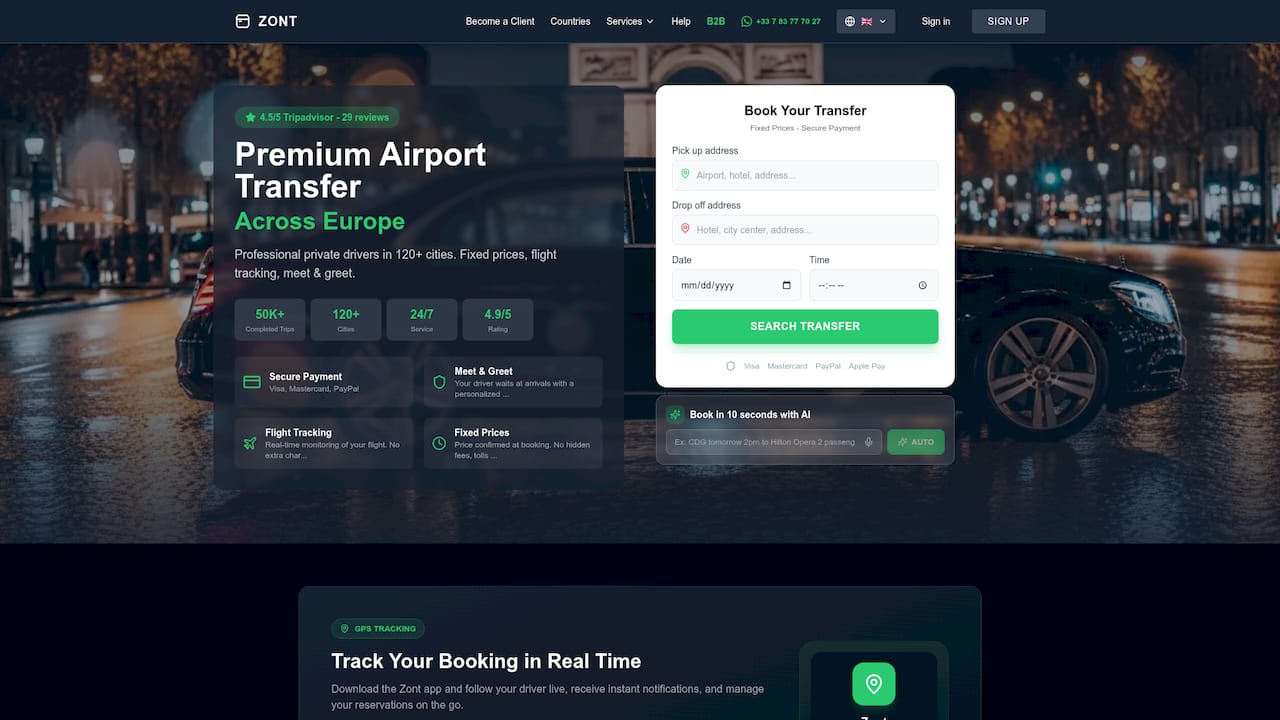
Zont operates premium airport transfers across 120+ cities in Europe, and the service is built specifically around the failure points this article describes. Every booking includes real-time flight tracking, so your driver adjusts automatically when your arrival time shifts. Meet and greet service means your driver is inside the terminal with your name on a sign, not circling the curb hoping you appear. Fixed pricing eliminates the fee surprises that come with rideshare caps and remote hub routing. With over 50,000 completed trips and a 4.5-star rating on TripAdvisor, Zont's track record reflects what professional transfer management actually looks like. If you are traveling through a major European airport and want a pickup that accounts for real conditions rather than scheduled ones, book your transfer with Zont before your next trip.
FAQ
What causes most airport transfer delays?
The most common causes are FAA Ground Delay Programs, airport curb congestion, construction-related lane closures, security staffing shortages, and curbside policy changes that reroute passengers to remote pickup hubs. These factors typically compound each other rather than occurring in isolation.
How do FAA Ground Delay Programs affect my transfer pickup?
A GDP delays your flight's departure from its origin airport by assigning a specific clearance time, which pushes your arrival later than scheduled. If your transfer driver was dispatched based on the original schedule, the timing mismatch can result in a significant wait or a re-dispatch.
Why is my rideshare or transfer driver at a different location than expected?
Airports like LAX implemented 2026 policies capping rideshare curbside pickups at 30% of terminal traffic, routing most passengers to a remote Ground Transportation Center. If your driver was not briefed on the updated pickup zone, coordination failure adds significant wait time.
How much buffer time should I allow for airport transfers?
A minimum of 90 minutes between your scheduled landing and any onward connection is advisable at major airports with known congestion. During peak arrival windows between 5 p.m. and 8 p.m., or during active weather events, 120 minutes is a more realistic buffer.
Does real-time flight tracking actually reduce transfer delays?
Yes. Transfer services using dynamic dispatch adjust driver timing based on live flight status rather than scheduled arrival, which directly reduces the most common cause of pickup mismatches. Services without this capability rely on fixed schedules that do not account for GDP-driven or weather-driven arrival shifts.