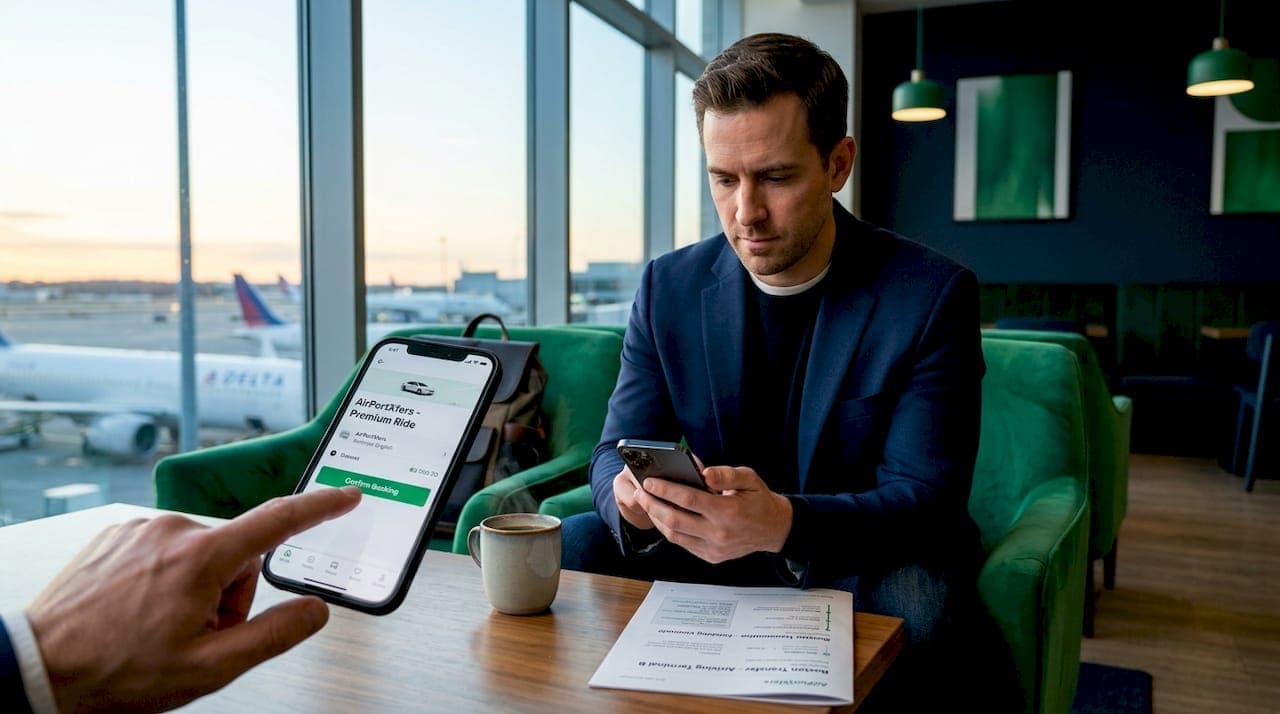
Airport transfer hidden fees are charges added on top of a quoted base fare, often turning a seemingly affordable ride into a budget-busting surprise. A Manhattan to JFK fare of $24 can balloon to $55 once a $19 reservation fee, $7 booking fee, and $5 airport surcharge are stacked on top. These extra costs, known in the industry as ancillary transport charges, follow predictable patterns once you know what to look for. This guide breaks down every major fee type with real-world examples so you can book your next transfer without the shock at checkout.
1. What airport transfer hidden fees actually are
Hidden fees in airport transfers are mandatory or near-mandatory charges that do not appear in the initial quoted price. They differ from optional upgrades because the traveler often has no practical way to avoid them. The industry term for this practice is "drip pricing," where the full cost is revealed only at the final booking step.
The FTC's 2026 StubHub settlement required businesses to disclose the total price, including all mandatory ancillary fees, before a consumer agrees to purchase. That regulatory standard applies pressure across the travel industry, but airport transfer providers are not uniformly compliant. Until full transparency becomes the norm, travelers must know how to spot these charges themselves.
2. Reservation and advance booking fees
Booking a ride in advance should save you stress, but it often costs you money. Ride-share platforms and some private car services charge a reservation fee simply for locking in a future pickup, separate from the base fare and any airport surcharges.
Convenience fees bundle reservation costs, online booking costs, and arrival surcharges as if they were one fare, but they are three distinct pricing components. Treating each as a separate line item helps you compare services accurately. A $19 reservation fee on a $24 base fare represents an 80% markup before the car even moves.
Pro Tip: Always click through to the final confirmation screen before committing to a booking. The total price shown on the search results page almost never includes all fees.
3. Airport infrastructure and curbside surcharges
Airports charge operators for using pickup and drop-off zones, and those costs are passed directly to passengers. These are called airport facility fees or curbside access fees, and they appear on nearly every platform operating out of major airports.
Manchester Airport charges between £5 and £25 for timed pick-up and drop-off access across Terminals 1, 2, and 3. That fee structure means a driver who waits even slightly too long moves into a higher pricing tier. The penalty for unauthorized stopping or zone violations reaches £100, a cost that drivers frequently recover by adding surcharges to future fares.
Curbside penalty fees represent one of the largest hidden fee risks travelers face, because the charge is triggered by the driver's behavior, not the passenger's choice. Understanding local airport curbside rules before you arrive reduces the chance of absorbing those costs indirectly.
4. Fuel surcharges on fixed-rate transfers
Fixed-rate transfers are marketed as predictable, but fuel surcharges can quietly erode that certainty. Mears Connect added a 3% fuel surcharge on all reservations, which adds roughly $7.50 to a $250 express transfer. The surcharge is calculated on the total transportation cost and remains in place indefinitely.
This matters because travelers often choose fixed-rate services specifically to avoid variable pricing. A fuel surcharge reintroduces cost variability through the back door. Always check the surcharge policy at the time of booking, not at the time of travel.
5. Booking channel fees and interface charges
Where you book determines what you pay, and the difference can be significant. Frontier Airlines charges a $25 Carrier Interface Charge for tickets purchased at the airport, ostensibly to push customers toward online booking. The online booking fee is labeled "optional," but avoiding it at the airport costs more than the fee itself.
The same logic applies to airport transfer services. Booking through a third-party aggregator often adds a platform convenience fee on top of the operator's own charges. Booking directly with the transfer provider eliminates one fee layer, though it requires more research upfront.
6. Waiting time and parking fees passed to passengers
When your flight lands late, your driver waits. That waiting time is often billable, and the meter starts after a short grace period of 15 to 30 minutes depending on the provider. Taxi services at major airports frequently add parking fees to the fare when they must use a paid holding lot while waiting for passengers.
Toronto Pearson airport introduced a no-upfront-payment transfer model specifically to address traveler anxiety about prepayment and hidden waiting charges. That model improves trust because the final fare reflects actual service delivered, not estimated time. When booking any transfer, ask explicitly whether waiting time is included and at what rate it begins.
7. Real-world airport transfer hidden fees examples
The following table shows documented fee examples from real services and airports, illustrating how airport transfer cost breakdowns can diverge sharply from advertised prices.
| Service or airport | Base or advertised cost | Hidden fee(s) | Total or penalty |
|---|---|---|---|
| Ride-share, Manhattan to JFK | $24 | $19 reservation + $7 booking + $5 airport surcharge | $55 |
| Manchester Airport pick-up zone | £5 entry fee | Overstay or wrong zone | Up to £100 penalty |
| Mears Connect express transfer | $250 fixed rate | 3% fuel surcharge | ~$257.50 |
| Frontier Airlines airport ticket | Base fare | $25 Carrier Interface Charge | Base fare + $25 |
Each row represents a documented case where the final cost exceeded what a traveler would reasonably expect from the initial price. The Manhattan to JFK example is the starkest: the fees more than doubled the base fare.
8. How to identify and avoid hidden fees when booking
Avoiding unseen fees in airport transport requires a specific sequence of checks before you confirm any booking.
- Request the all-in price. Ask the provider or check the final checkout screen for a total that includes every fee, tax, and surcharge before you enter payment details.
- Research airport-specific curbside rules. Check the official airport website for pick-up zone policies, time limits, and penalty structures. Manchester Airport publishes these clearly; many others do not.
- Compare booking channels. Book directly with the transfer operator when possible to avoid third-party platform fees. If using an aggregator, read the fee breakdown line by line.
- Choose fixed-rate providers with written surcharge policies. A fixed rate is only truly fixed if the provider commits to no fuel, congestion, or dynamic pricing add-ons. Get that in writing or confirmed in the booking confirmation email.
- Check payment timing requirements. Manchester Airport payments for pick-up zones must be made online by midnight the following day, or the charge escalates to a higher Penalty Charge Notice. Know the deadlines before your trip.
- Use providers with flight tracking. When a service tracks your flight and adjusts pickup time automatically, you avoid waiting time fees caused by delays outside your control.
Pro Tip: Screenshot the final price confirmation page before completing your booking. If a dispute arises later, that image is your clearest evidence of what was agreed.
9. Comparing airport transfer options by fee transparency
Different transport modes carry very different risks for hidden charges. Here is how the most common options compare.
| Transfer type | Common hidden fees | Fee transparency | Best for |
|---|---|---|---|
| Ride-share (Uber, Lyft) | Surge pricing, airport surcharge, reservation fee | Low to medium | Short trips, flexible timing |
| Traditional taxi | Parking, waiting time, metered overruns | Low | Last-minute bookings |
| Pre-booked private transfer | Fuel surcharge, reservation fee | Medium to high | Predictable cost travelers |
| Airport shuttle | Luggage fees, group surcharges | Medium | Budget travelers |
| Premium fixed-rate service | Minimal if policy is clear | High | Business and stress-free travel |
Ride-share apps like Uber and Lyft are the most prone to surge pricing and airport surcharges, particularly during peak departure windows. Traditional taxis add parking and waiting fees that vary by airport. Pre-booked private transfers offer the best balance of predictability, provided the provider publishes a clear surcharge policy. Premium services with transparent pricing across Europe eliminate most of these variables by quoting a single confirmed price at booking.
Key takeaways
Airport transfer hidden fees are predictable once you know the categories: reservation fees, airport surcharges, fuel surcharges, curbside penalties, and booking channel charges each follow documented patterns that travelers can identify and avoid with the right preparation.
| Point | Details |
|---|---|
| Fees stack fast | A $24 base fare can reach $55 after reservation, booking, and airport surcharges. |
| Curbside penalties are severe | Manchester Airport charges up to £100 for unauthorized stops or zone violations. |
| Fixed rates are not always fixed | Fuel surcharges like Mears Connect's 3% add-on can raise confirmed prices after booking. |
| Booking channel matters | Airport bookings can cost $25 more than online bookings for the same service. |
| Transparency is the solution | Providers that disclose all fees before confirmation eliminate the most common budget surprises. |
What I've learned about airport transfer fees after years of travel writing
The most consistent mistake I see travelers make is treating the first price they see as the real price. It almost never is. The ride-share industry in particular has built a fee architecture that is deliberately opaque, stacking reservation charges, booking fees, and airport surcharges in a sequence designed to be accepted quickly at checkout rather than scrutinized.
What actually works is slowing down at the booking step. Spend 90 seconds reading the full price breakdown before confirming. That single habit has saved me from paying double the expected fare more times than I can count. The Manchester Airport curbside penalty system is a perfect example of a fee that catches travelers off guard not because it is hidden in fine print, but because most people simply do not think to check airport infrastructure rules before their trip.
My strongest recommendation is to prioritize providers that quote a single confirmed price at the time of booking and back it up in writing. That is not a luxury. It is the baseline standard that the FTC's pricing transparency rules are pushing the entire travel industry toward. Travelers who demand that standard now are simply ahead of where the market is heading.
— Arthur
Travel without the fee surprises: Zont airport transfers
Zont operates premium airport transfers across 120+ cities in Europe with a single confirmed price at booking. No fuel surcharges added after confirmation. No curbside penalty risk passed to passengers. No booking channel fees layered on top.
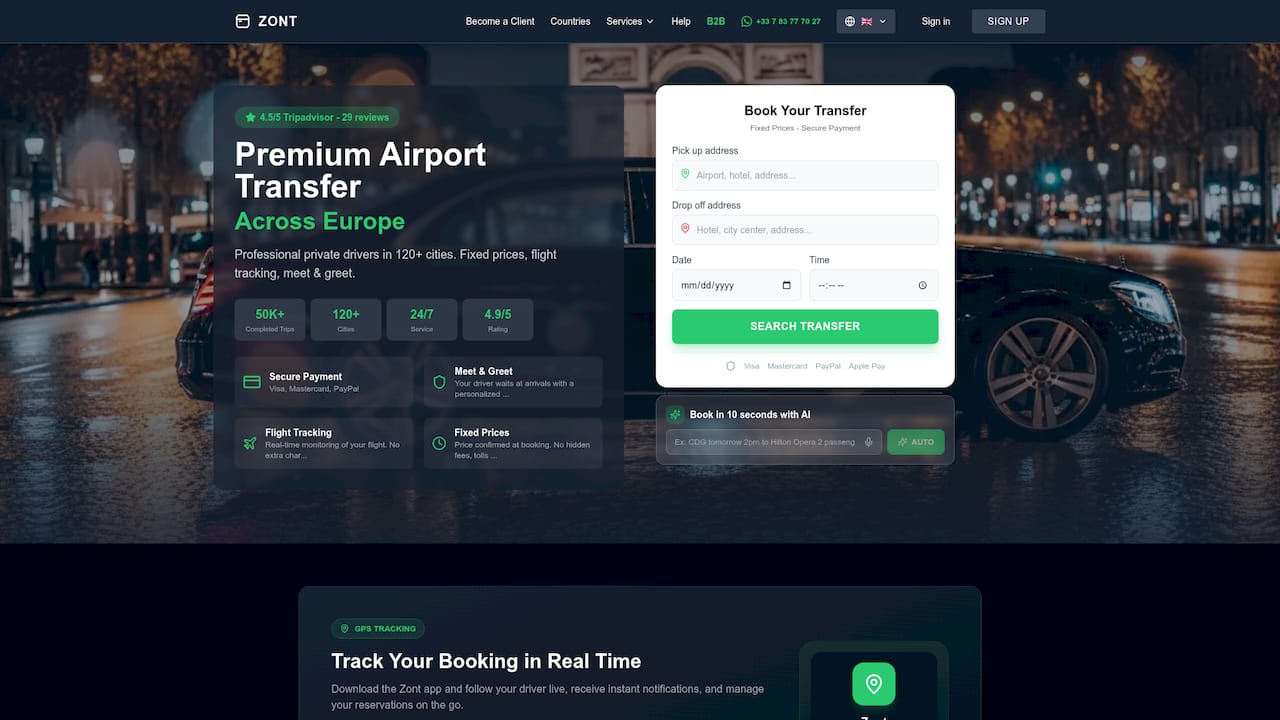
Every Zont transfer includes flight tracking, meet and greet service, and a professional driver, so delays never trigger waiting time charges. With over 50,000 completed trips and a 4.5-star rating on TripAdvisor, the service is built around one principle: the price you see is the price you pay. If you want a fixed-price private transfer in Europe without the fee anxiety, Zont is the direct answer.
FAQ
What are the most common airport transfer hidden fees?
The most common hidden fees are reservation fees, airport infrastructure surcharges, fuel surcharges, waiting time charges, and booking channel fees. A documented example shows a $24 ride-share fare reaching $55 after these charges are applied.
How do I avoid hidden charges on airport shuttles?
Request a full price breakdown before confirming, book directly with the operator to avoid third-party platform fees, and choose services that publish a fixed all-in price at checkout.
Why do airport curbside fees vary so much?
Each airport sets its own pick-up and drop-off zone pricing. Manchester Airport charges between £5 and £25 depending on duration, with a £100 penalty for violations. Fees differ by terminal, time of day, and zone designation.
Are fixed-rate airport transfers truly fixed?
Not always. Mears Connect added a 3% fuel surcharge to all fixed-rate reservations, raising a $250 transfer by approximately $7.50. Always confirm whether the quoted price includes all surcharges before booking.
Does booking online always cost less than booking at the airport?
Not universally, but often yes. Frontier Airlines charges a $25 Carrier Interface Charge for airport bookings, making the online option cheaper despite its own optional booking fee. Compare both channels before deciding.